
Skip to content

Endodontics (Root Canal Treatment)

Endodontics (Root Canal Treatment)

Endodontics (Root Canal Treatment): Save Your Tooth, Relieve Pain

Root canal treatment, which is applied when the nerves and vessels in the inner part of the tooth become inflamed, is an important treatment method that saves the tooth from extraction and relieves pain.

How Root Canal Treatment Is Carried Out

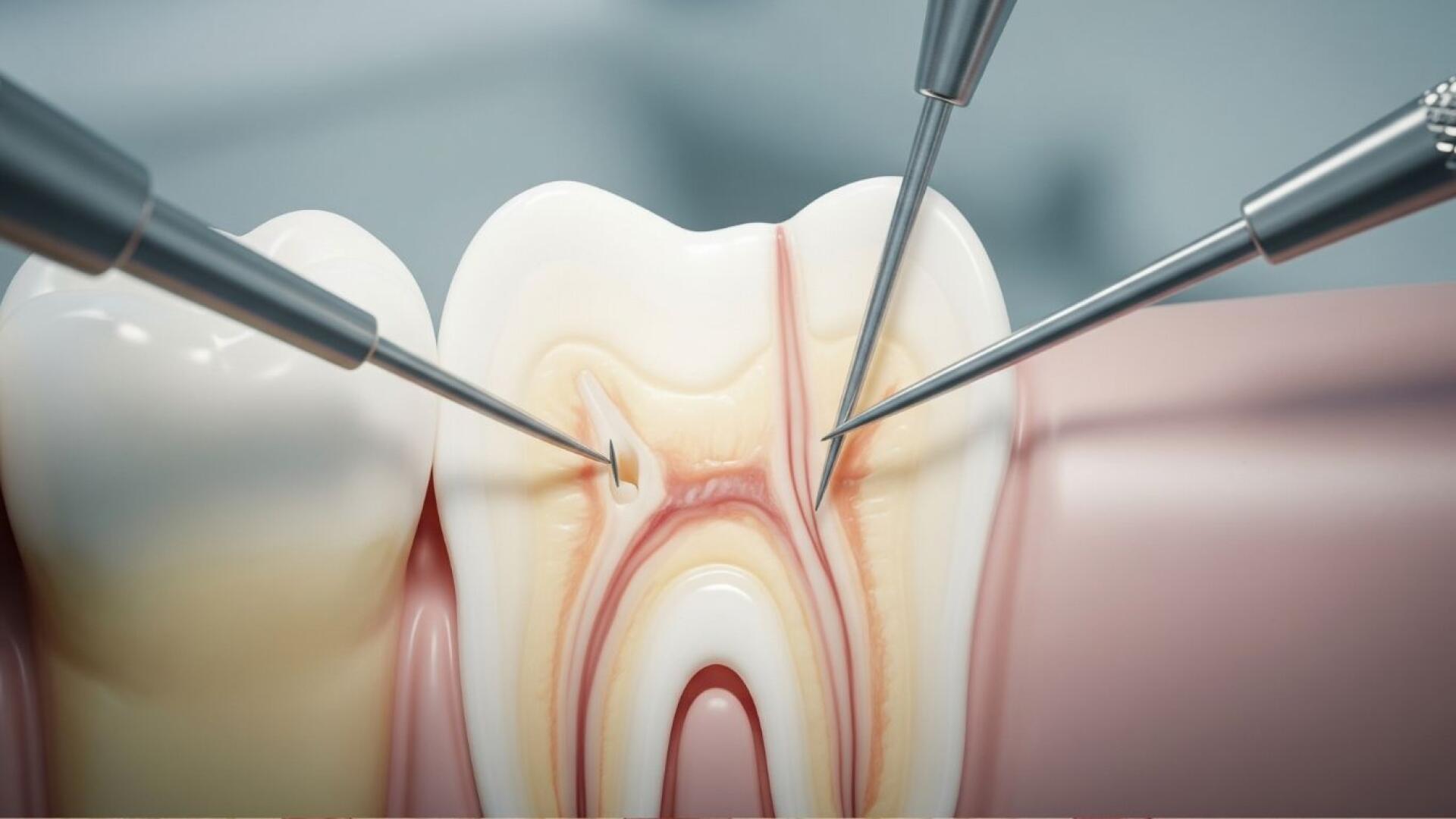
When the tooth pulp becomes infected as a result of advanced cavities or trauma, we carry out root canal treatment at our clinic under sufficient local anaesthesia, with the working field isolated by a rubber dam. This treatment helps preserve natural chewing function by keeping the tooth in the mouth.

Scientific Background: The Development of Root Canal Treatment

1838 — The first canal file. The American dentist Edwin Maynard shaped a watch spring into the first instrument suitable for cleaning a root canal. Until then, extraction was the only answer to a painful tooth.

1864 — The rubber dam. Sanford Barnum introduced the rubber sheet that isolates the tooth from saliva and oral bacteria. Because the success of root canal treatment depends heavily on keeping the working field sterile, this simple invention was decisive — and it remains the standard today.

1988 — Nickel-titanium files. Walia and colleagues showed that files made from a nickel-titanium alloy were many times more flexible than steel ones. That flexibility made it possible to clean curved canals while following their own anatomy, shortening the procedure and reducing the risk of distorting the canal shape.

The logic of the treatment

Root canal treatment does not "kill" a tooth. The aim is to remove inflamed or necrotic pulp tissue from the canal system, shape and disinfect the canal, and seal it so bacteria cannot recolonise it. The tooth itself continues to function in the jaw.

Any brittleness afterwards comes less from the treatment than from the loss of tooth structure, which is why a crown is often recommended for posterior teeth.