
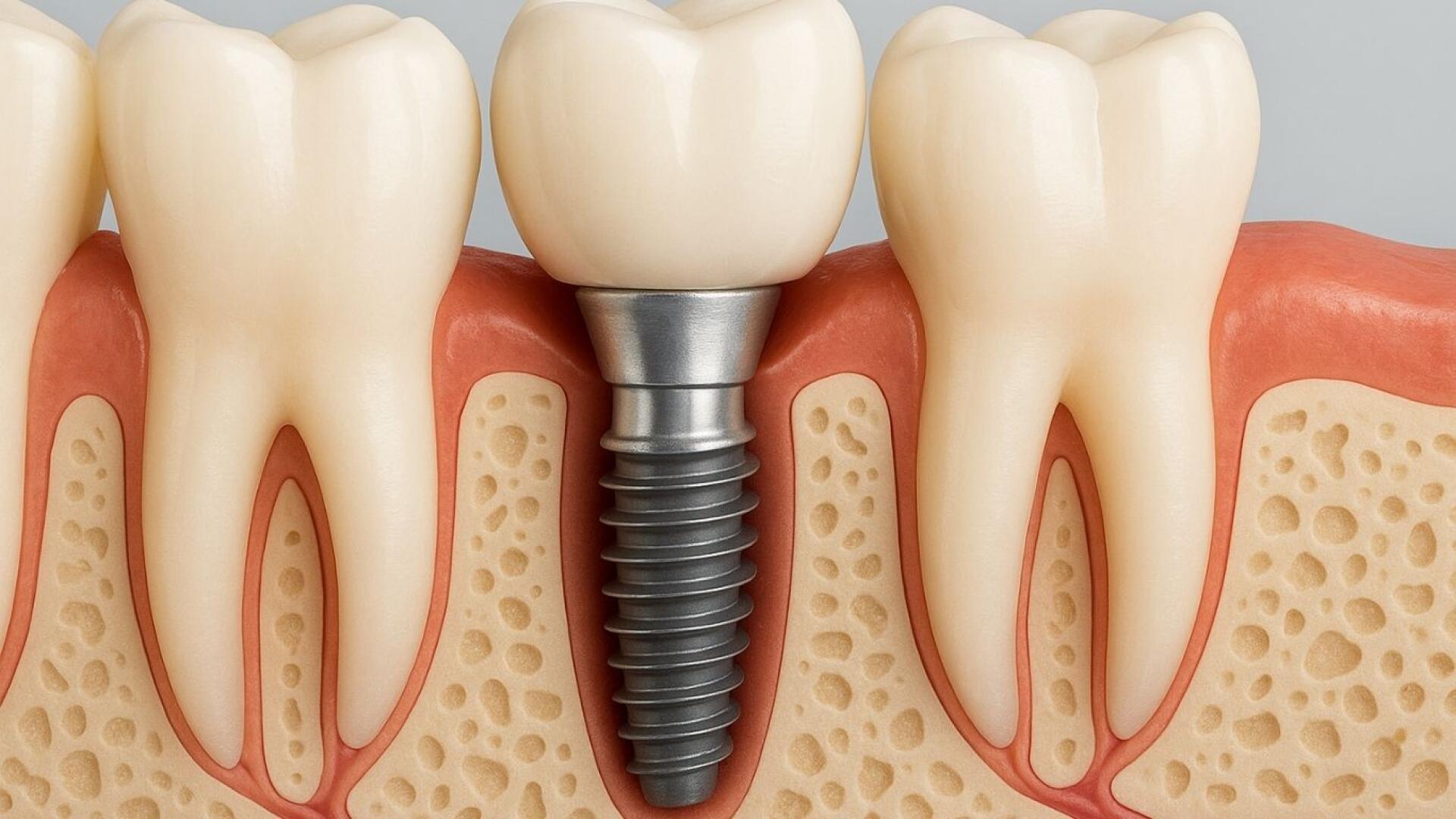
Implantology: Natural and Permanent Solution for Missing Teeth
Missing teeth, beyond being just an aesthetic problem, can seriously threaten your oral health by negatively affecting chewing function and causing bone resorption in the jaw. As Dr. Murat Papak, we offer a lasting solution to these problems with dental implant treatment applied in our Istanbul clinic.
Fusion to the Bone and a Natural Feeling
The titanium implants used in our clinic are biocompatible with the jawbone, which is what allows the bone to fuse directly to the implant surface (osseointegration). With porcelain or zirconium crowns placed on them, an appearance close to that of a natural tooth is achieved; because chewing forces are transmitted directly to the bone, the sensation is close to a natural tooth too.
Durability and Care
The lifespan of an implant is determined by the health of the surrounding gum and bone; with regular check-ups and daily care it can function for many years. Your treatment plan is drawn up after an examination and a panoramic X-ray, and the cost is shared with you in writing on the basis of that plan.
Scientific Background: The Discovery of the Dental Implant
Around AD 600 — Early attempts. A Mayan mandible found in Honduras in 1931 contained pieces of sea shell placed in the sockets of missing incisors. Examination showed bone had formed around the shells, making it one of the earliest known implant attempts.
1952 — Osseointegration discovered. The Swedish orthopaedist Per-Ingvar Brånemark could not remove a titanium chamber he had placed in rabbits to study bone healing: the bone had fused directly to the titanium. He named the phenomenon osseointegration.
1965 — The first patient. Titanium implants were placed in Gösta Larsson, who had congenitally missing teeth. They remained functional for the rest of his life, and the case is regarded as the starting point of modern implantology.
What this means in practice
Osseointegration happens not because the implant is screwed into bone, but because bone fuses to the implant surface. That biological process takes time, which is why the restoration is not fitted immediately and a healing period is observed.
The same principle explains why the health of the gum and bone around an implant matters for life: as with a natural tooth, inflammation around an implant (peri-implantitis) can cause bone loss. Regular follow-up after implant treatment is therefore part of the treatment itself.