
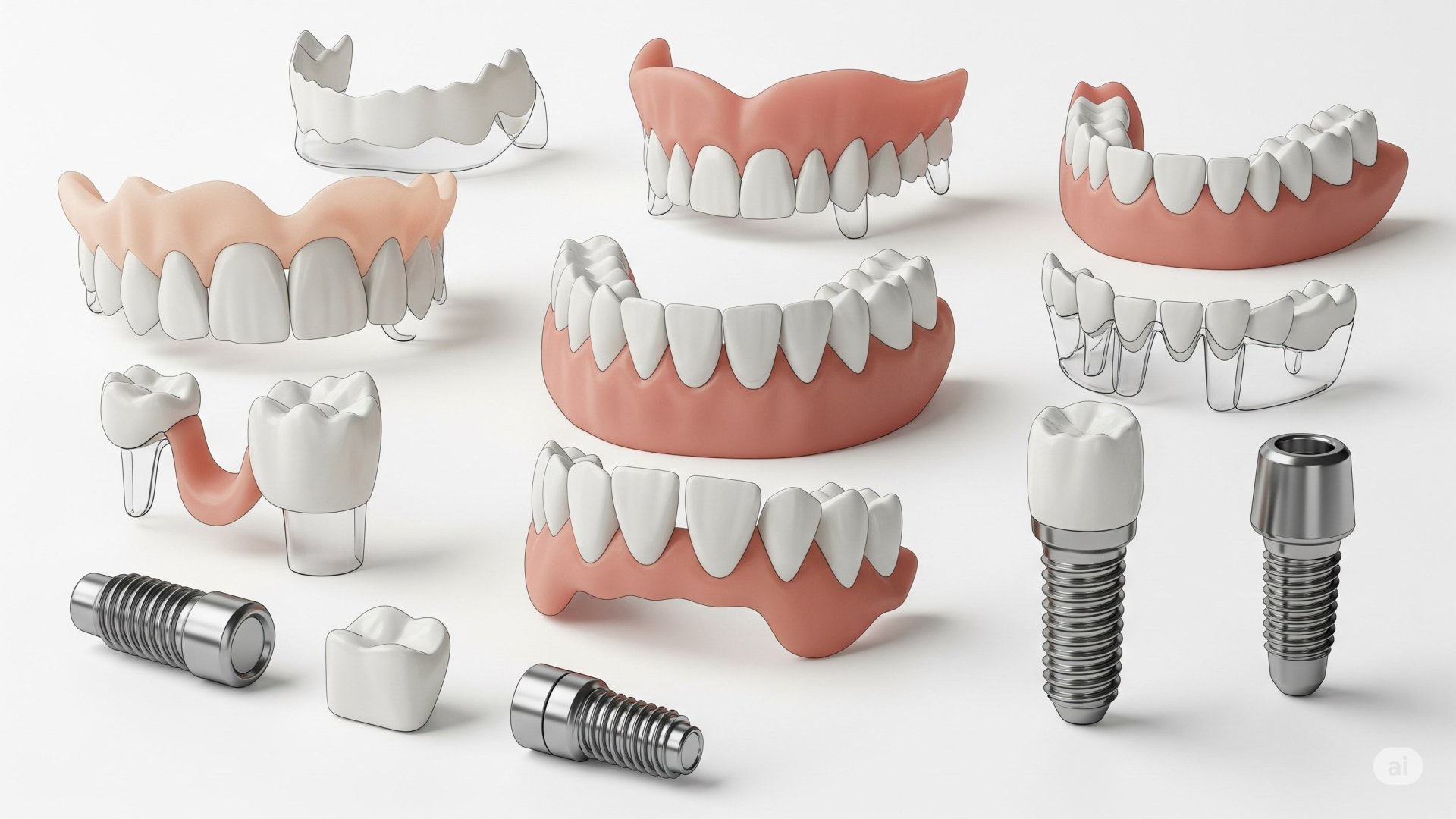
A single missing back tooth is often postponed because “no one can see it”. But the mouth is a closed system: the absence of one tooth directly affects its neighbours and the opposing tooth.
What happens over time
First months: bone loss begins
Jawbone is maintained by the chewing load placed on it. When a tooth is removed, that stimulus stops and bone starts to resorb — fastest in the first 6–12 months, which creates a need for grafting if an implant is planned later.
1–2 years: neighbours tilt
Teeth tilting into the gap create areas that are hard to clean, raising the risk of decay and gum inflammation.
After 2 years: the opposing tooth over-erupts
With nothing to meet, the opposing tooth slowly moves out of its socket, which can lead to its loss too and complicates prosthetic planning.
Other effects
- Chewing load becomes uneven, increasing wear and fracture risk on the other side.
- The jaw joint is strained by one-sided chewing.
- Speech and appearance are affected when front teeth are lost.
Treatment options
Implant
Neighbouring teeth are untouched and bone stimulation continues. The most preferred long-term solution; it can be placed at the time of extraction where bone allows.
Bridge
Teeth either side are reduced to act as supports. Faster, but healthy tooth structure is removed and the bone underneath continues to resorb.
Removable denture
Used with multiple missing teeth or where implants are unsuitable. The most economical option, but comfort and chewing efficiency lag behind fixed solutions.
When to seek treatment
Planning within the first three months after extraction keeps options open while bone volume is preserved. Grafting need and treatment time grow as months pass.